
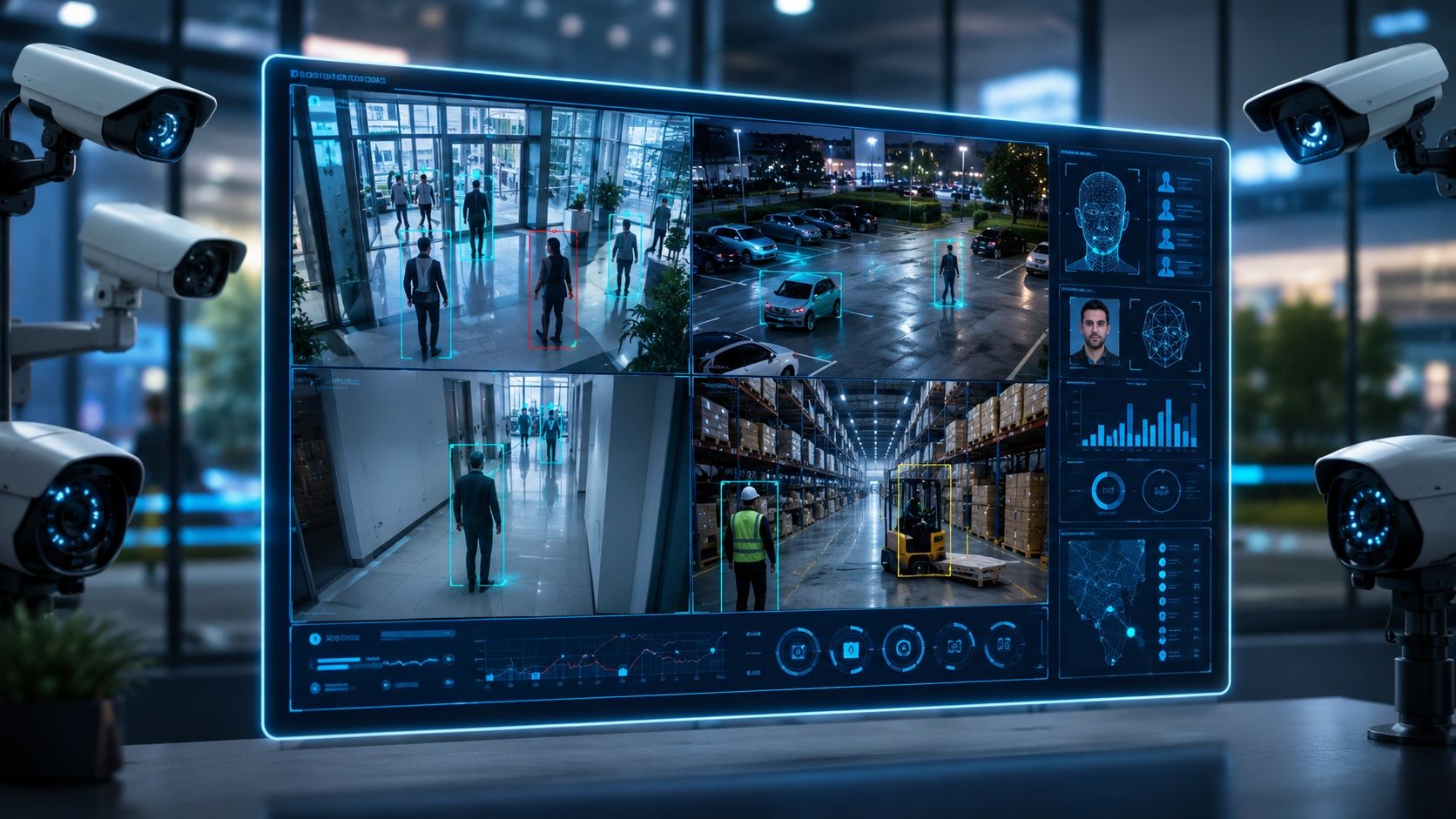
False alarms are the biggest reason security teams start ignoring camera alerts altogether. When a system sends 150 notifications a day and 145 of them are wind, shadows or a moth near the lens, staff stop checking their phones every time it buzzes. This is where an AI camera monitoring service earns its keep - not by adding more alerts, but by cutting the ones that don't matter.
Why Traditional Motion Detection Fails
Older motion sensors trigger on any pixel change. A tree branch swaying, headlights sweeping across a wall, rain hitting the lens - all of it counts as "motion" to a basic sensor. There's no distinction between a person walking through a parking lot and a plastic bag blowing across it. The alert volume becomes unmanageable and real events get buried in noise. Experience smarter security with our AI camera monitoring service - visit our website to get started.
Object Recognition Changes the Equation
Modern analytics classify what's actually in frame before sending an alert. A system that can tell the difference between a person, a vehicle, an animal and background movement only flags the categories that matter for a given site. A warehouse might only care about people and forklifts; a residential property might only care about people near doors and windows. This filtering alone removes the bulk of irrelevant alerts.
Learning Site-Specific Patterns
Beyond basic classification, some systems learn what's normal for a specific location over time - regular delivery trucks, employee arrival patterns, recurring foot traffic. Once a baseline is established, deviations from that pattern become easier to flag accurately, while routine activity stops generating unnecessary notifications.
The Trade-Off: Speed vs Accuracy
Adding a confirmation step to filter false positives introduces a small delay, usually under a second, while the system checks multiple frames before alerting. This is a reasonable trade for accuracy, since the alternative is either instant alerts on everything or slow manual review of hours of footage after something has already happened.
Measurable Impact
Sites that switch from basic motion detection to object-aware analytics commonly report alert volume dropping by 80% or more, with the remaining alerts far more likely to represent something worth checking. Staff regain trust in the system because when it does notify them, it's usually right.
An AI camera monitoring service doesn't eliminate false alarms entirely, but it shifts the ratio enough that alerts become something teams act on instead of dismiss.
Read a similar article about AI Monitoring For IP Cameras info here at this page.